
Herons and Egrets of Roebuck Bay
Roebuck Bay and its surrounding ecosystems are home to 10 different species of herons and egrets. They can be seen enjoying the rich diversity of prey and habitat available to them along the shores of Roebuck Bay, within the grips of lush mangroves, and along the vast alluvial plains and intertidal flats of Roebuck Plains. They feed on fish, insects, crabs, and for some – mudskippers!
Some of these herons and egrets are quite distinct. They may be easily identifiable due to their size or plumage. Others look very similar and need a closer look to find features that differentiate them.
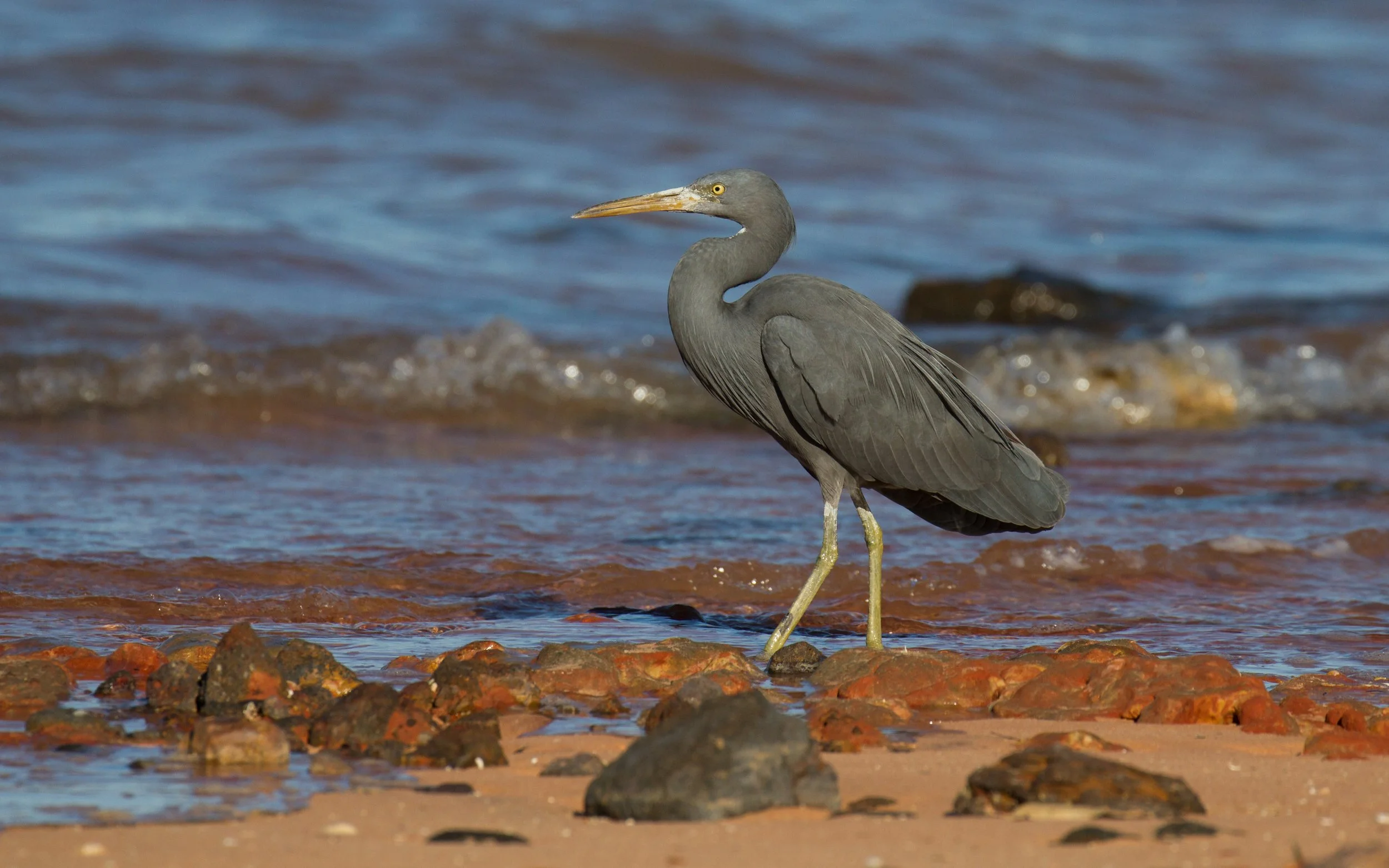
An Eastern Reef Egret stalks the shores of Roebuck bay, searching for food. Photo taken by Ric Else.
To get an idea of how exciting it is to see and identify these birds, we have developed a state-of-the-art system to provide fellow birders and naturalists with an idea of what it means to be in the moment and spot these birds. The “Oh My Goodness Look It’s A… Rating” (or “OMGLIA Rating” for short) is a scaled system from 1-10. Birds that score one bring little to no excitement and enthusiasm. They inspire no desire to share the sighting with friends and are often pest species. Birds that score 10 bring you so much joy that you could scream but you can’t because you are birdwatching and must remain quiet for fear of frightening the bird. It doesn’t matter whether they rare or common – it’s all about how they make you feel.
Please note that this rating is subjective and can vary from person to person. The OMGLIA score for these birds was taken as an average from all our team here at the Broome Bird Observatory.
Without further ado, let’s learn about the herons and egrets of Roebuck Bay and beyond!
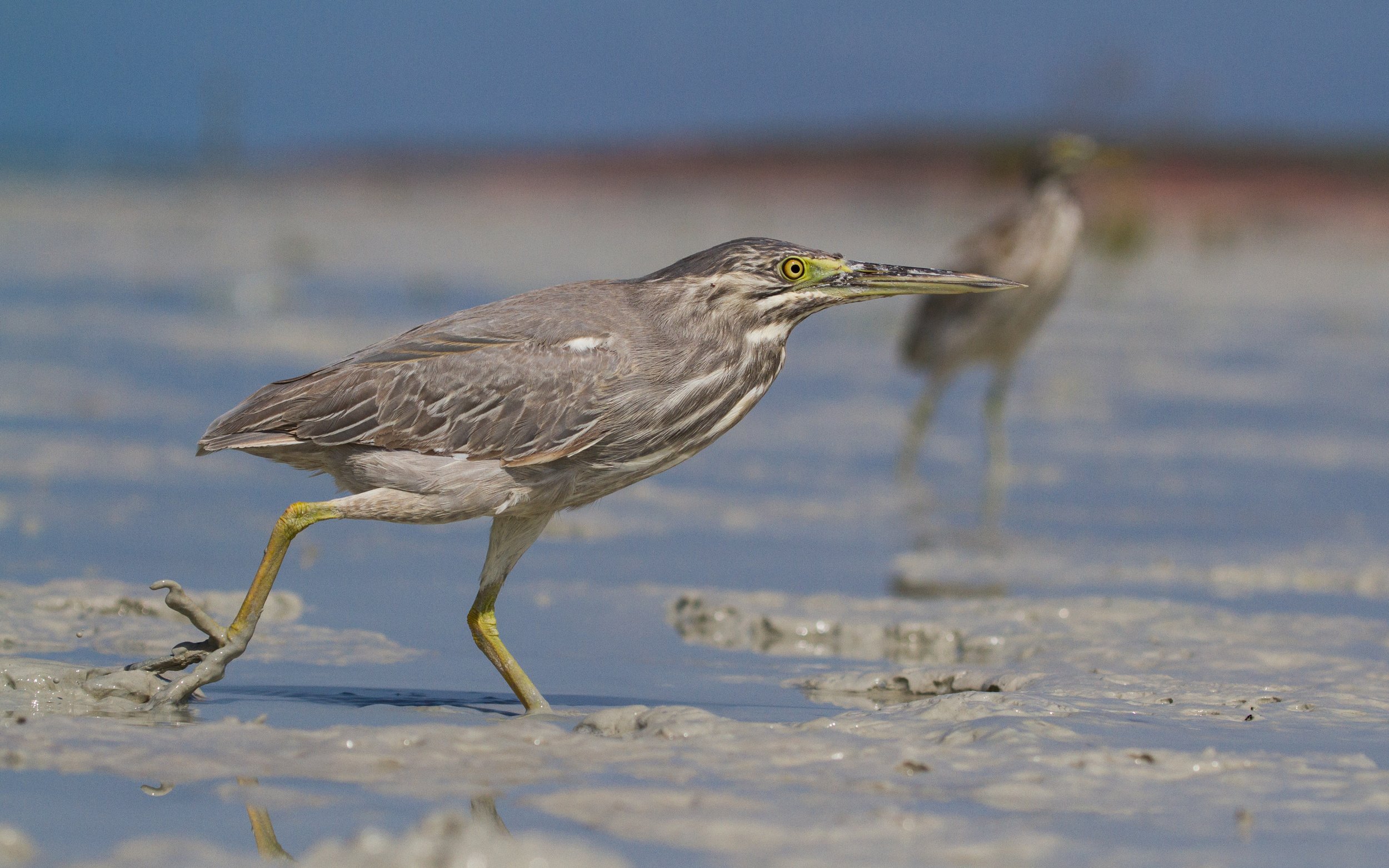
A juvenile Striated Heron prances across the mudflats with a friend close by. Photo taken by Ric Else.
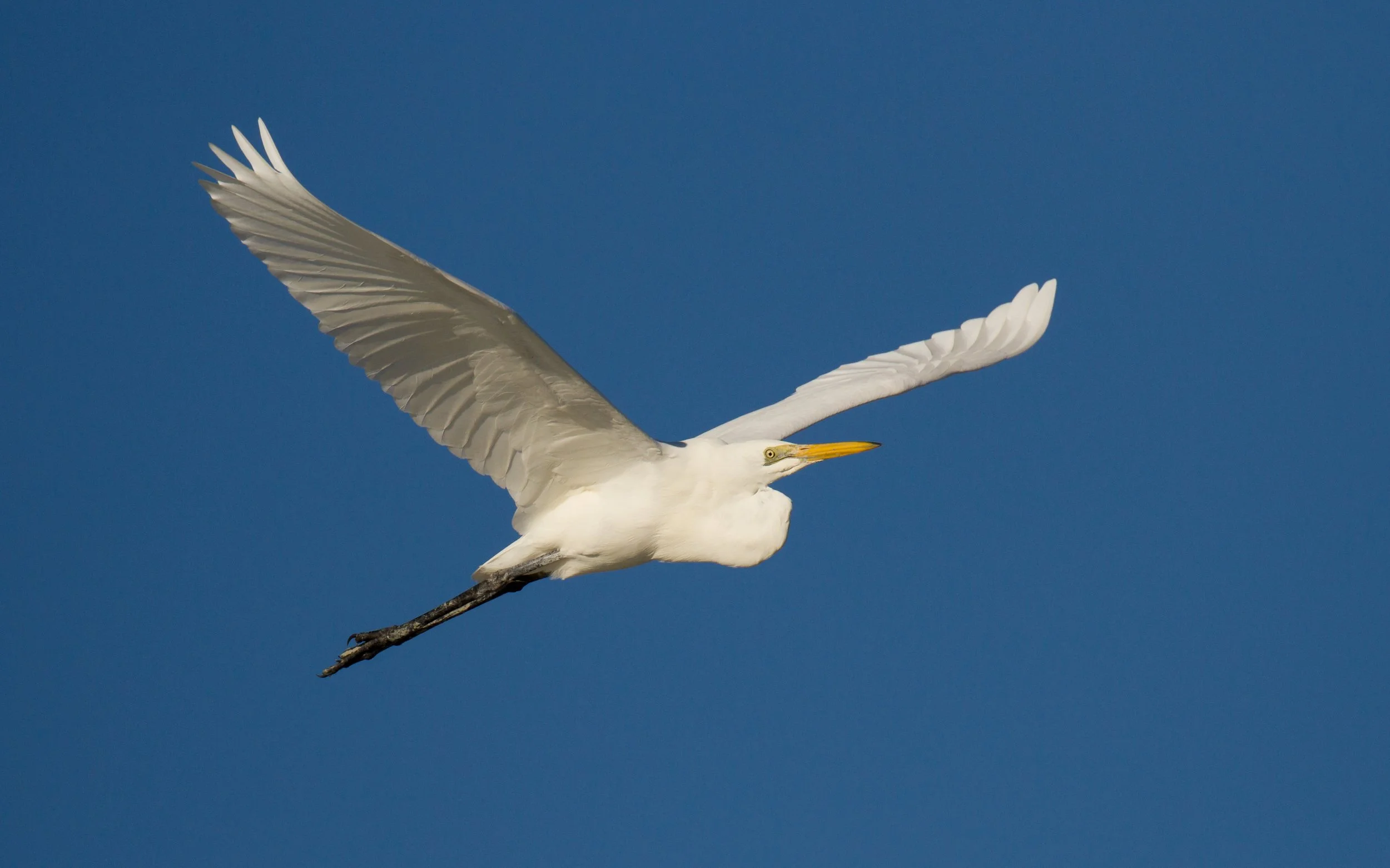
A Great Egret soars overhead. Photo taken by Ric Else.
Identifying features: Great Egrets are one of the largest of the herons and egrets found in Broome. They have a very long bill that forms a gape which extends just underneath the eye. They are most often confused with the plumed egret - they are much larger and have a flatter head in comparison.
Their breeding plumage transitions from a bright yellow bill (non-br) to briefly black-billed extending around the eyes, then to a light teal surrounding the eye with a black bill as the courtship flush (br). The upper legs can also flush red while the feathers seen when resting (scapulars) become plumed.
In a word: Regal
OMGLIA Rating: 7

A Great Egret spreads its wings to frighten a Silver Gull and secure a patch of feeding territory. Photo taken by Ric Else.
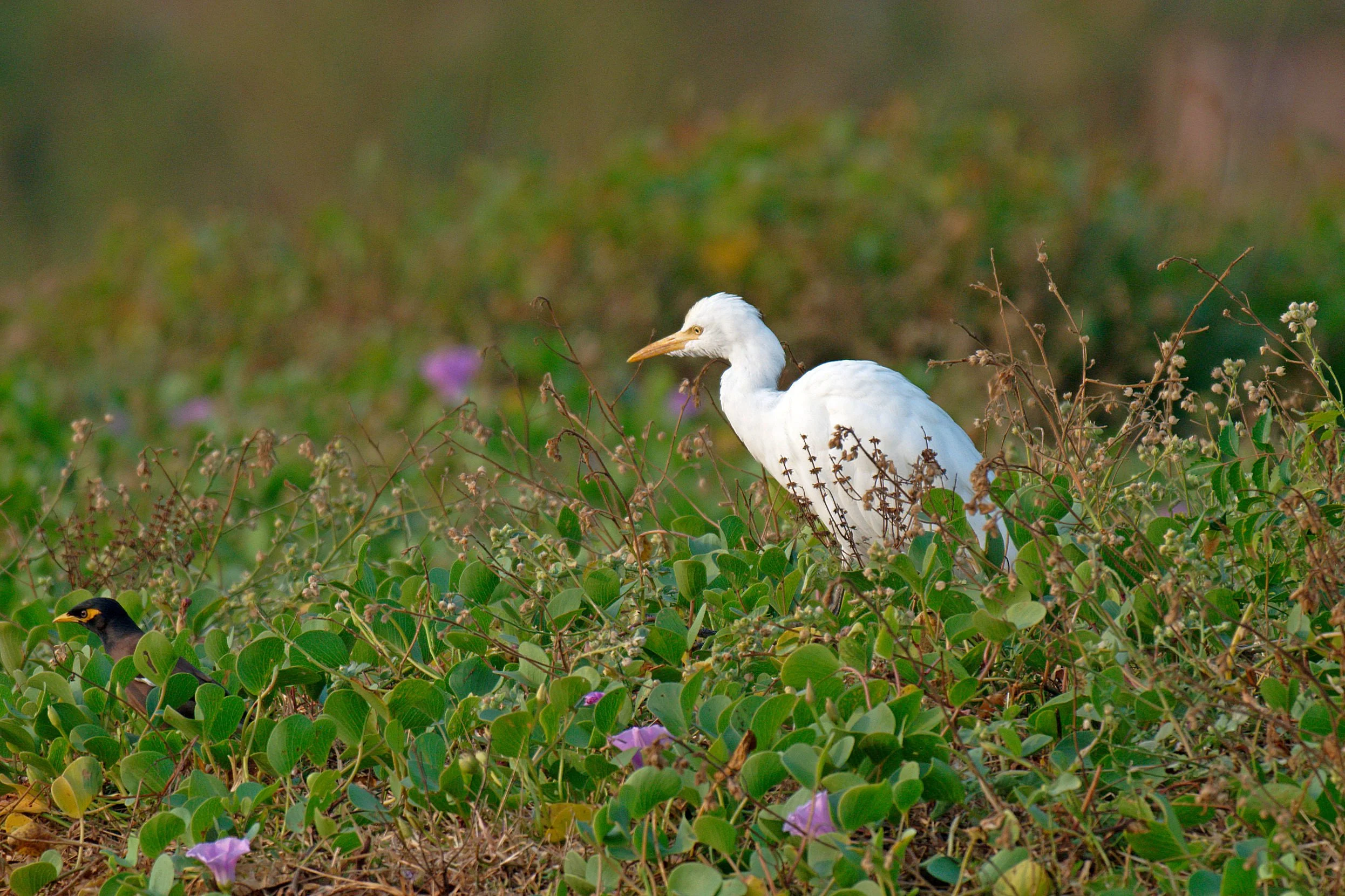
Plumed Egret - Image by Drashokk
Identifying features: Plumed egrets sit in between Great egrets and Little egrets in body and bill size. They have a rounded head and yellow bill that becomes red-orange in breeding plumage. Using other egrets nearby or that you may have seen recently as a reference point to size is the key to identifying this species. If you get a close enough look, you can also see the absence of a yellow gape (like the Great Egret has) that extends underneath the eye.
Their foraging behaviour is much slower than other egrets – sometimes also reported as graceful. They prefer nesting in heronries with other species.
In a word: Majestic
OMGLIA Rating: 8.2
White-necked Heron Ardea pacifica
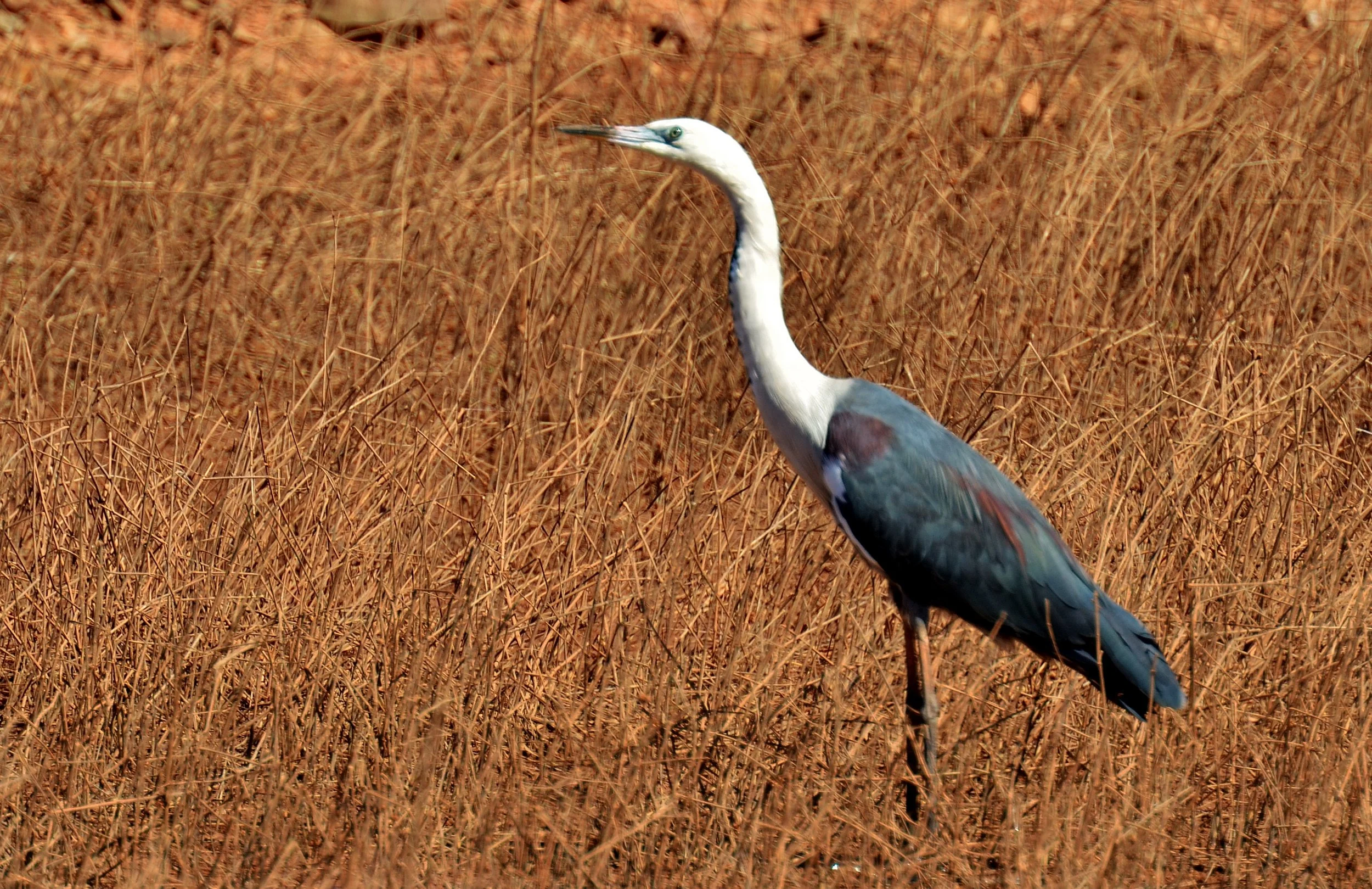
White-necked Heron - Image by Laurie Boyle
Identifying features: Also known as the Pacific Heron, White-necked Herons are large herons that prefer freshwater environments but can also be seen along coastlines or nearby mangroves. They have dark grey wings and a white neck with spots covering the throat in non-breeding plumage. In flight, they have distinctive white patches on their wings.
These birds can fluctuate in numbers within an area depending on rainfall. Some years you may rarely come across them in a certain area, other years there may be plenty.
In a word: Transient
OMGLIA Rating: 7.7
White-faced Heron Egretta novaehollandiae
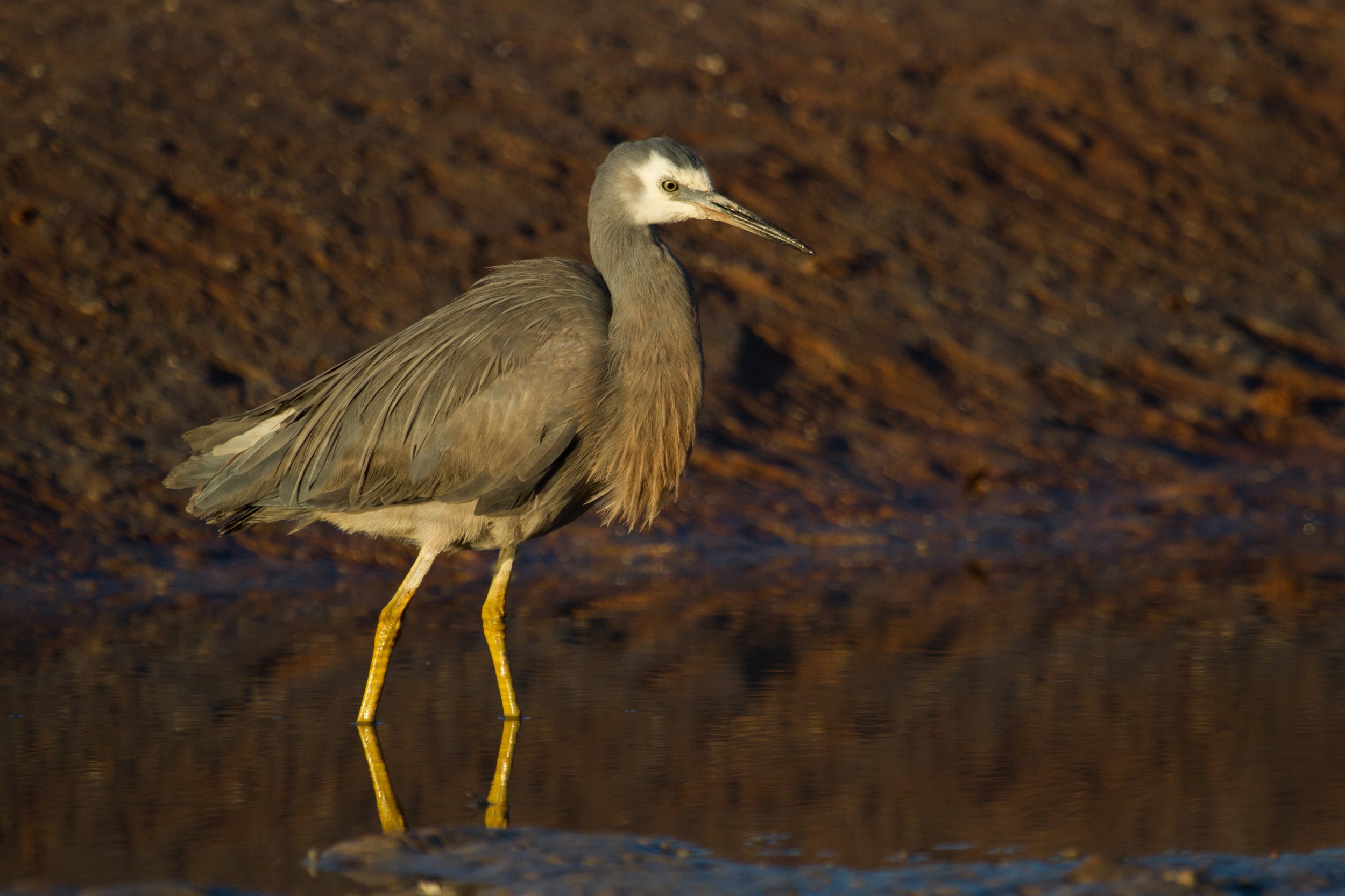
A White-faced Heron at golden hours shows off its tufted plumage whilst ankle deep in water. Photo taken by Ric Else.
Identifying features: A very distinctive member of the heron family, White-faced Herons are aptly named given their white face as adults. Juveniles have a much darker face more closely resembling the grey plumage along its back in colour. There aren’t many other species that are easy to confuse the White-faced Heron with. Eastern Reef Egrets (dark morph) are a similar colour but do not have the white face or rufous breast feathers.
They are also Australia’s most wide-spread heron, found in all parts of the continent and in a variety of different habitats from urban wetlands to the beautiful shores of Roebuck Bay.
In a word: Abundant
OMGLIA Rating: 5.6
Little Egret Egretta garzetta
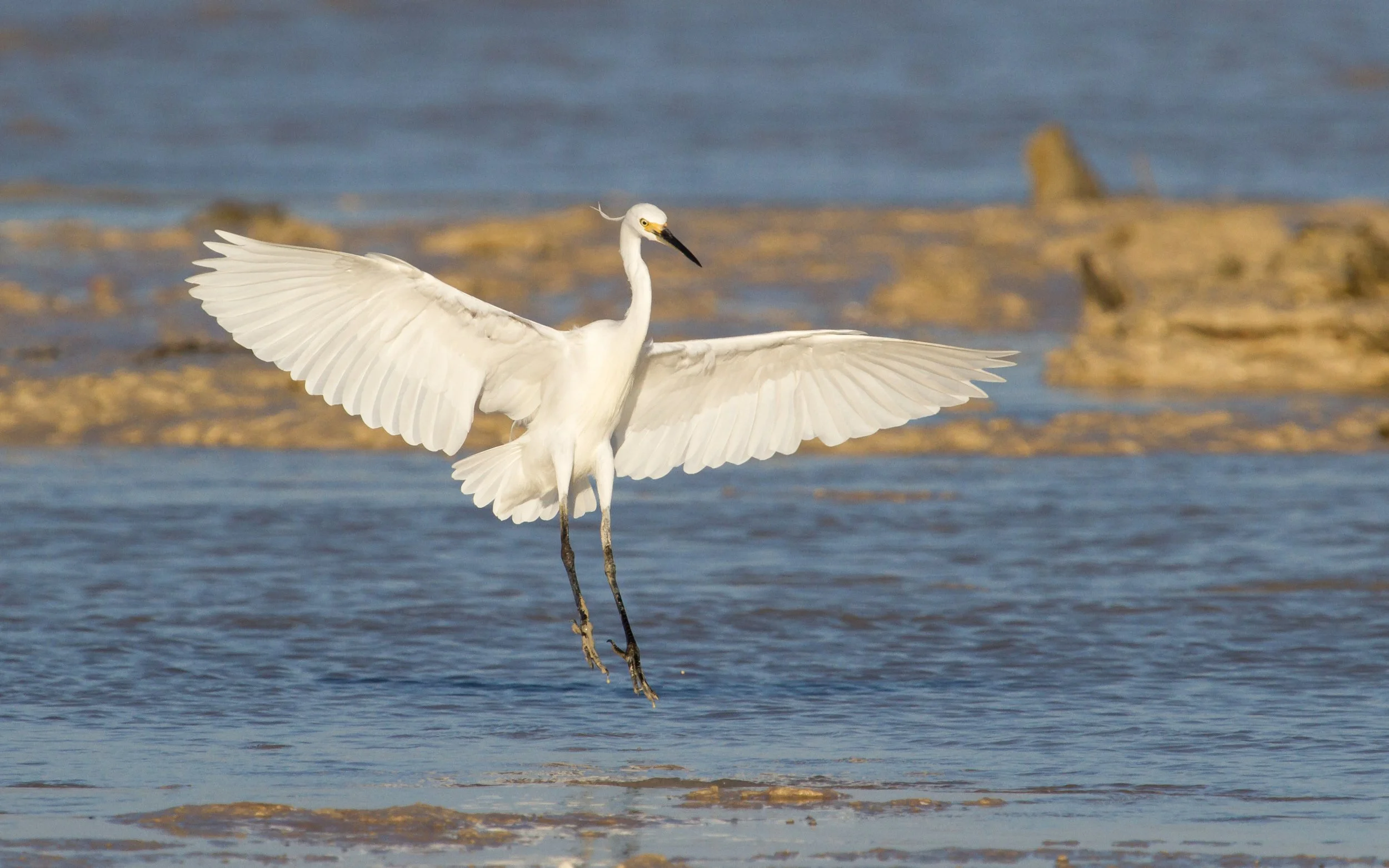
A Little Egret frolicks along a rocky shoreline, frightening prey into view. Photo taken by Ric Else
Identifying features: Little Egrets are smaller in size compared to Great and Plumed Egrets. Adults have a slim, mostly black beak while juveniles have a mostly yellow beak of equal proportion. You may see them dancing throughout wetlands – this is characteristic of their foraging behaviour.
Little Egrets have long plumes that extend from their neck in breeding plumage, giving the appearance of a long, wispy ponytail.
You can find Little Egrets in all sorts of habitats. They like saline wetlands of saltmarsh, tidal flats, inland freshwater wetlands and more.
In a word: Flighty
OMGLIA Rating: 6.3
Eastern Reef Egret Egretta sacra
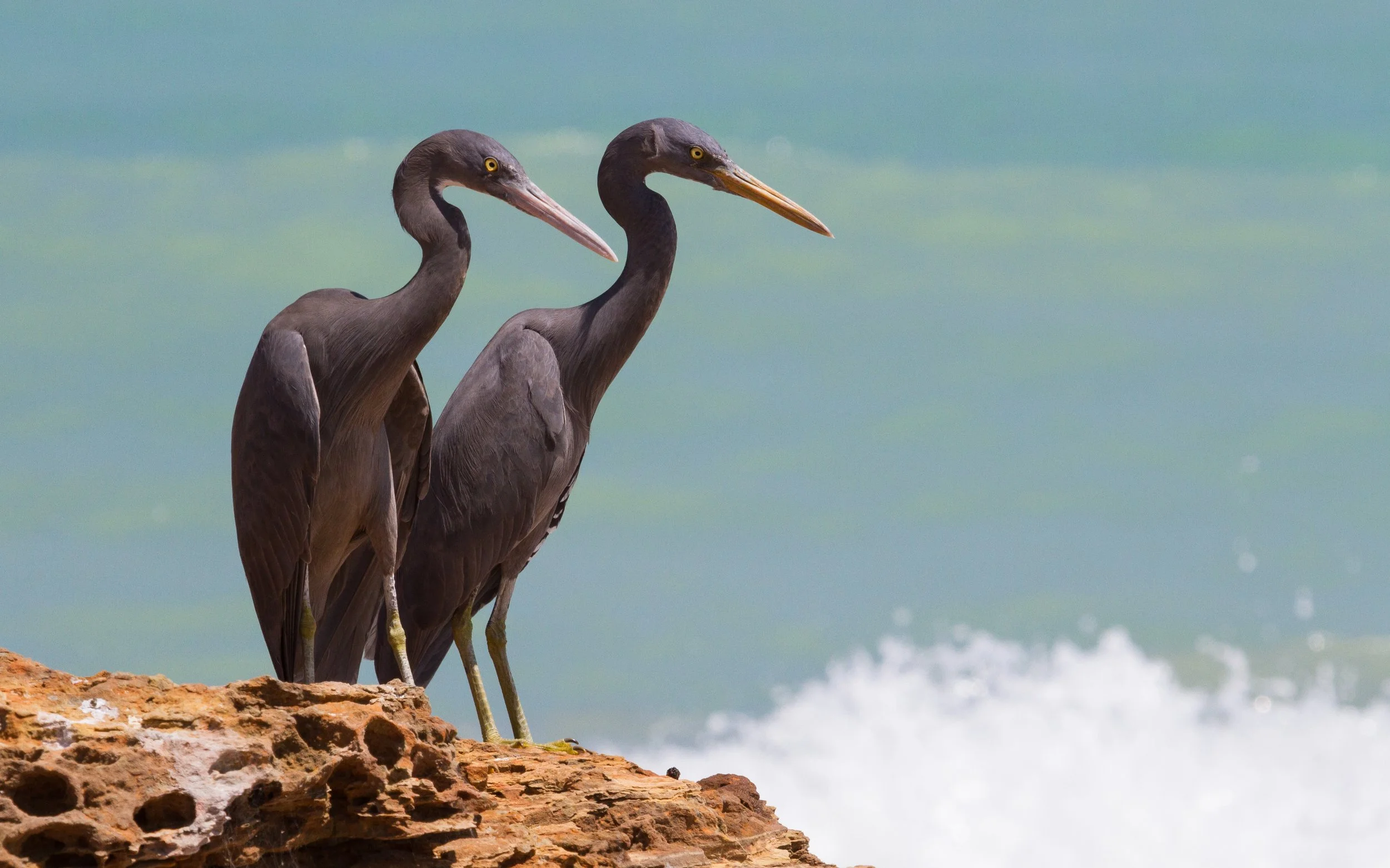
Two Eastern Reef Egrets take time to observe the incoming tide atop a rocky outcrop. Photo taken by Ric Else.
Eastern Reef Egrets have a light and a dark morph. The dark morphs are easily identifiable because of their unique dark grey plumage. It may be confused with the White-faced Heron, although in comparison the dark morph has much darker plumage and a yellow beak.
Light morphs have completely white plumage and can easily be confused with Little Egrets. To distinguish between the two, light morph Eastern Reef Egrets have a completely yellow beak and are much stockier with shorter legs, a shorter neck and a heavier bill.
Larger egrets tend to have their long legs trailing well behind them in flight, while both Eastern Reef Egret morphs have legs that sit very close to their body in flight.
This species enjoys rocky shorelines with areas to forage for crabs amongst rock pools and between crevices. Both morphs are common in tropical climates while the dark morph is more common in southern Australia.
In a word: Confused (can’t decide on its favourite colour scheme)
OMGLIA Rating: 7.5

A dark (left) and light (right) morph Eastern Reef Egret enjoy each other’s company at Tattler’s Rocks. Photo taken by George Pergaminelis.
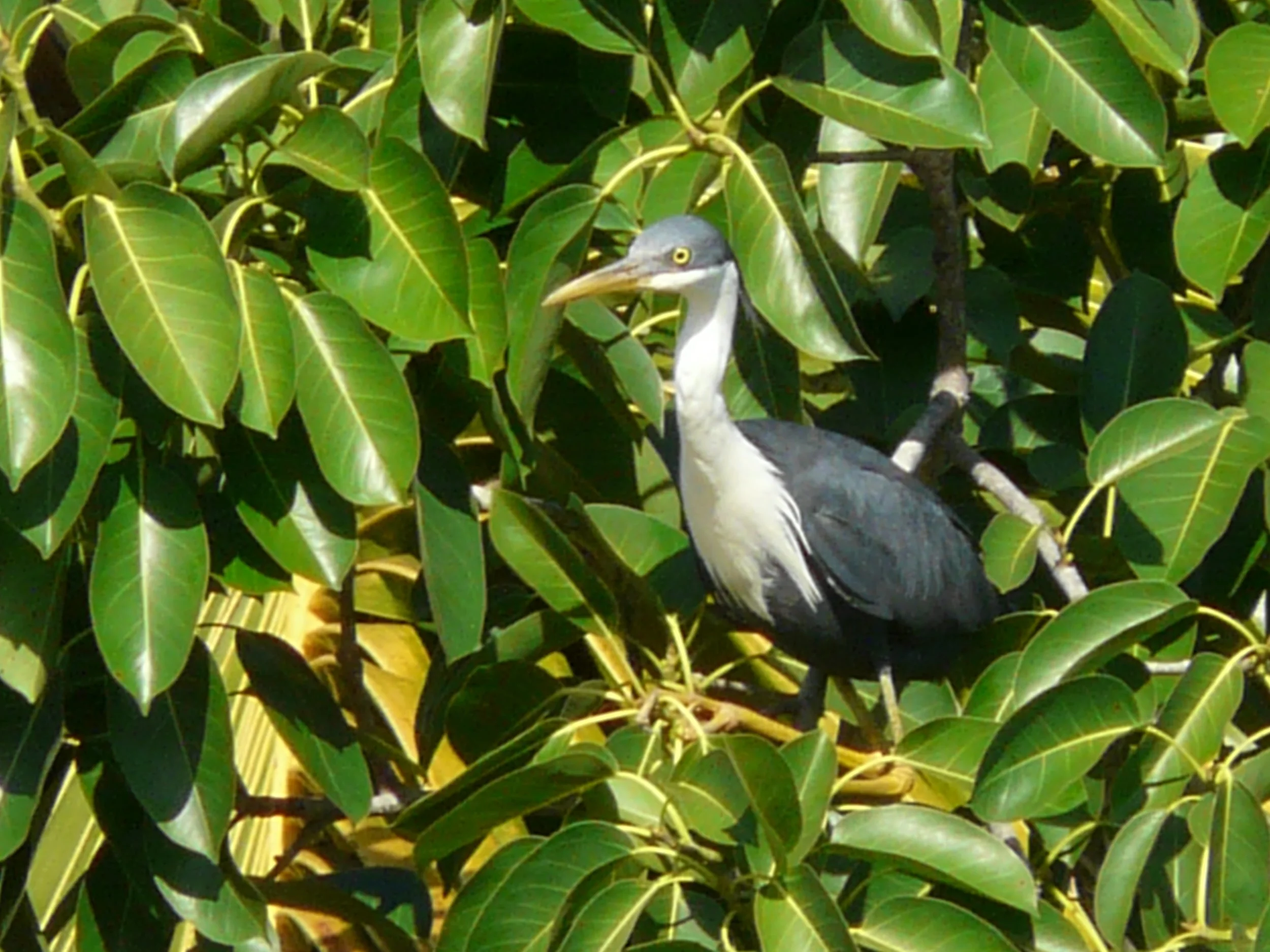
Pied Herons are found throughout the floodplains of northern Australia. They are much smaller than the White-necked Heron with blackish plumage on its back and white plumage extending up its neck. Its most defining feature is the black cap on its head that extends over its eye as an adult. Juveniles do not have this cap but are still unique in their size and colouration relative to other herons and egrets.
Pied Herons like to nest in mixed heronries. They are often seen foraging or perched with other Pied Herons and, on occasion, can be seen in groups of 1000s whilst roosting.
This is a special bird for a few people here at BBO - the listing competition between resident birders means that birds like the Pied Heron that are uncommon to the area are highly sought after (hence its very high OMGLIA rating).
In a word: Charismatic
OMGLIA Rating: 9.5
Cattle Egret Bubulcus coromandus
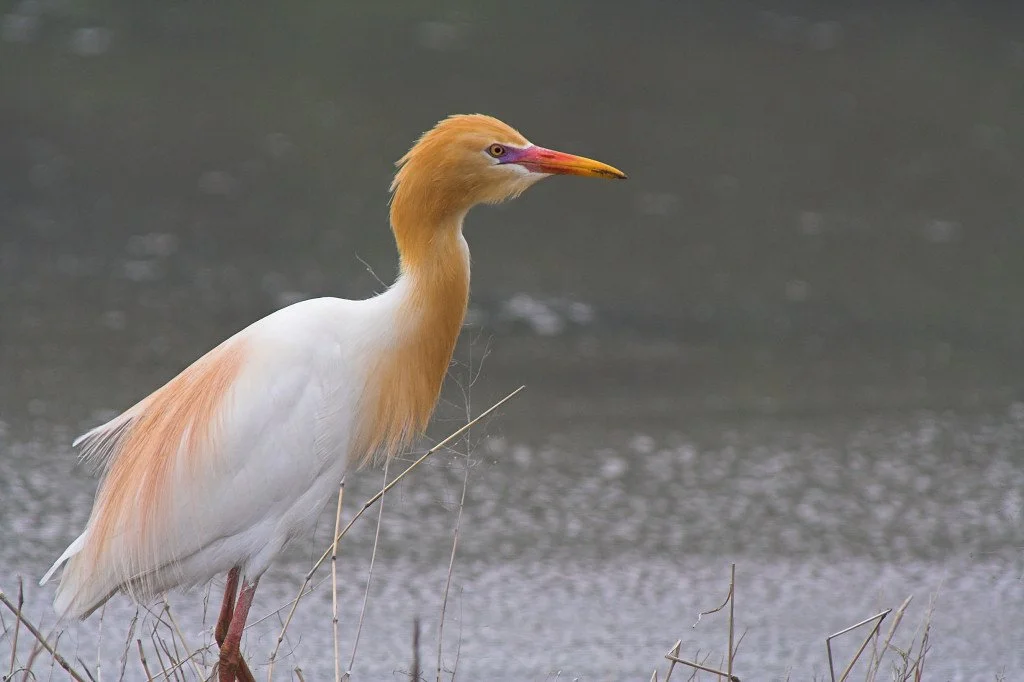
Catlle Egret in Breeding plumage - Image- Su Neko
Identifying features: Cattle Egrets differ greatly in appearance between breeding and non-breeding plumage. Their breeding plumage along their neck, chest and back is an unmistakeable orange-rufous colour – unlike anything you will see on other local egrets and herons. Their legs become yellow and orange during a courtship flush.
In non-breeding plumage they are completely white with black legs. They are a similar size to Little Egrets. The distinguishing feature of the non-br Cattle Egret is its completely yellow bill and much straighter neck at full stretch.
They consistently have white wings and a yellow bill (except during courtship flush when it becomes bright orange) that is short and slightly downcurved. They also have a gently rounded head compared to Plumed and Little Egrets which have a slight rise towards the back of the top of their head.
Cattle Egrets are found in paddocks and wetlands and enjoy the company of livestock (most often Cattle unsurprisingly). They feed on the invertebrates that are left vulnerable from disturbed soil.
In a word: Sociable
OMGLIA Rating: 8.3
Little Heron Butorides atricapilla
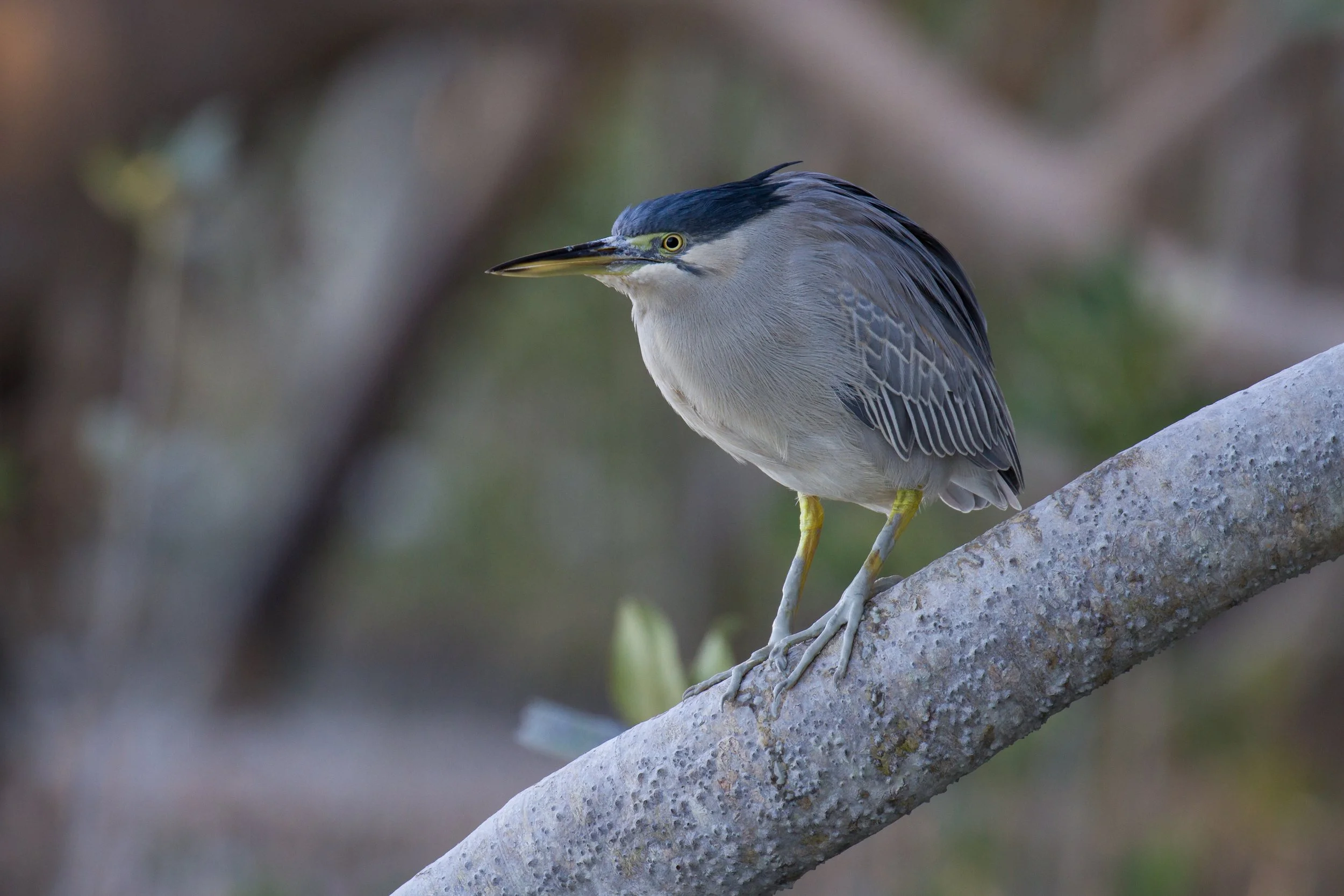
An adult Little Heron perches peacefully in the mangroves. Photo taken by Ric Else.
Formerly known as the Striated Heron, Little Herons enjoy spending their time in mangroves and rocky shorelines. Adults have a distinct black cap and a black stripe underneath the eye. They are short, stocky and smaller than the Nankeen Night Heron.
Juveniles have the same long bill with yellow at the base but have much darker plumage with heavy streaks along their front.
They often crouch and tuck their necks in when resting. You may also see them standing still in front of a crab burrow, waiting for their meal to crawl up into the open so they can stretch their neck and snatch the crab with their long, heavy bill.
In a word: Rambunctious
OMGLIA Rating: 8
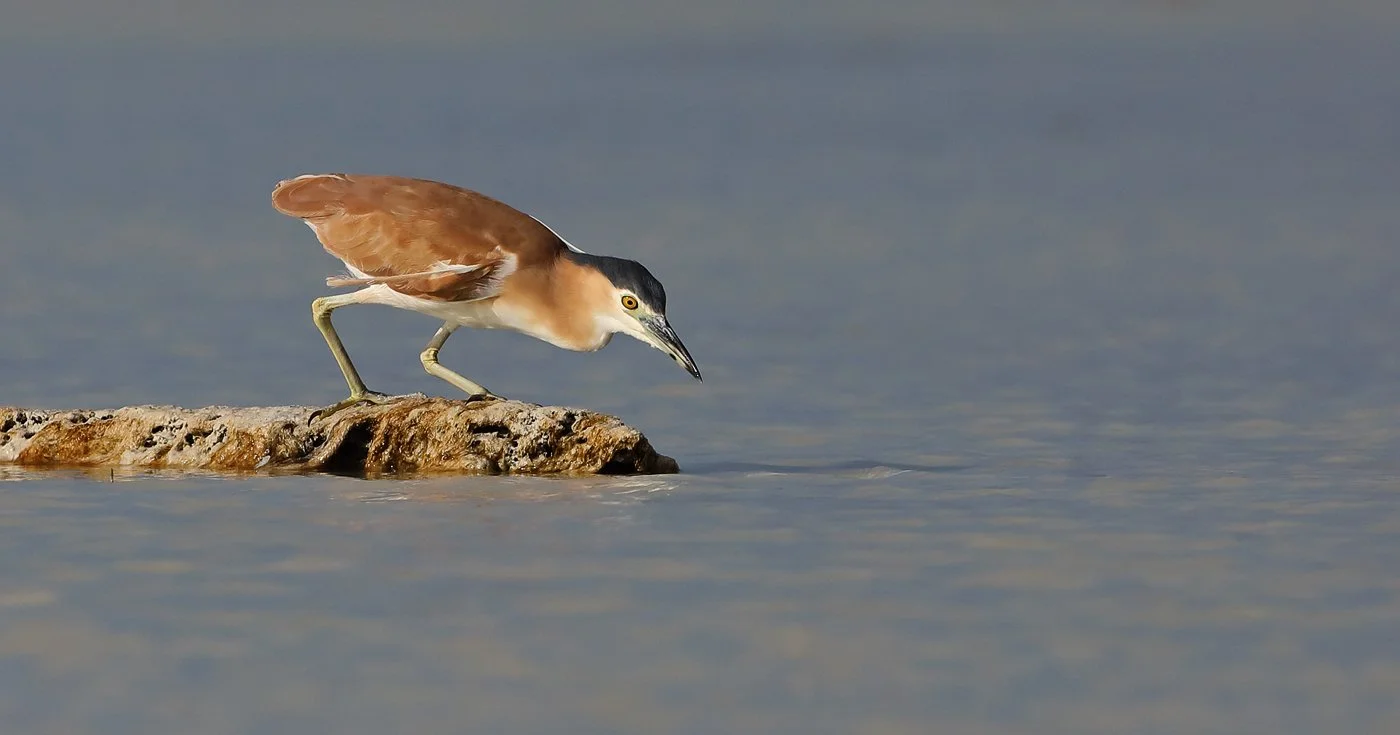
Nankeen Night Heron Hunting - image by Patrick Kavanagh
Nankeen Night Herons are more commonly found in freshwater wetlands but can sometimes be seen in coastal systems where the water is saltier. They have a black crown and dark rufous plumage as adults. Juveniles are covered in small, white stripes also called ‘striations’. They are quite stocky and are often seen roosting in a hunched position.
In the Roebuck Bay area, they may be confused with a Little Heron. It’s important to remember that Nankeen Night Herons are much larger and prefer freshwater environments.
In a word: Mysterious
OMGLIA Rating: 8.5
Written by Jake van Dam